From residue to resource
Crop residues are often treated as a disposal problem. When unmanaged they may be burned, left to decompose inefficiently or removed without returning enough organic value to the soil.
Biochar offers a different pathway. Biomass is heated in a controlled, low-oxygen process called pyrolysis, producing a stable, carbon-rich material that can be prepared for agricultural use.
A structure that supports living soil
Biochar has a porous structure with a large internal surface area. When correctly produced and applied, those pores can hold water and nutrients and provide habitat for beneficial soil microorganisms.
It is not a substitute for good agronomy. Biochar works best as part of a wider soil-health programme that includes compost, appropriate nutrient management, crop rotation and locally suitable application practices.
Potential benefits for farmers
- Improved retention of water and nutrients in suitable soils.
- Better soil structure and support for beneficial microbial activity.
- Productive use of locally available agricultural residue.
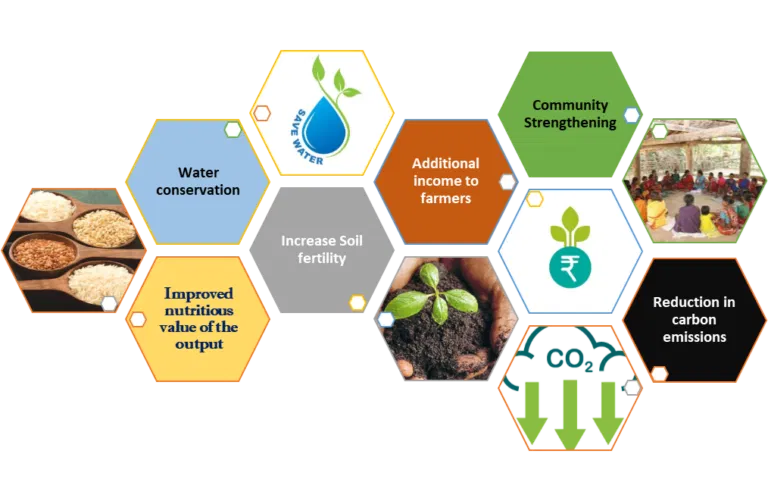
- Potential reductions in input losses and greater resilience during dry periods.
- An additional value chain that can create rural jobs and farmer income.
Stable carbon with measurable outcomes
During plant growth, biomass removes carbon dioxide from the atmosphere. Converting suitable residue into durable biochar can keep a portion of that carbon stable for a long period instead of allowing it to return quickly to the atmosphere.
Credible climate outcomes depend on traceable feedstock, controlled production, product testing, documented field application and conservative carbon accounting. Measurement must cover the complete chain, not only the final material.
Quality and context matter
Biochar properties vary with feedstock and production temperature. Before field use, the material should be evaluated for carbon content, pH, moisture, contaminants and suitability for the intended soil and crop.
Application rates should be based on trials and agronomic guidance. This avoids one-size-fits-all claims and ensures the practice responds to actual soil constraints and farmer priorities.
Building a circular rural system
The strongest biochar projects connect residue collection, responsible processing, farmer training, soil monitoring and climate measurement in one transparent system.
Done well, that system can conserve water, strengthen soils, reduce open burning, create additional rural income and store carbon. It turns an agricultural by-product into infrastructure for healthier farms and more resilient communities.